
Seeing well is so self-evident that you probably hardly think about it. Unless you do not see well. Then you are constantly reminded how important good vision is. Perhaps you wear glasses or contact lenses, or are you considering laser eye surgery? In that case you will want to know more about how a healthy eye works. More about that here.
Anatomy of the eyes
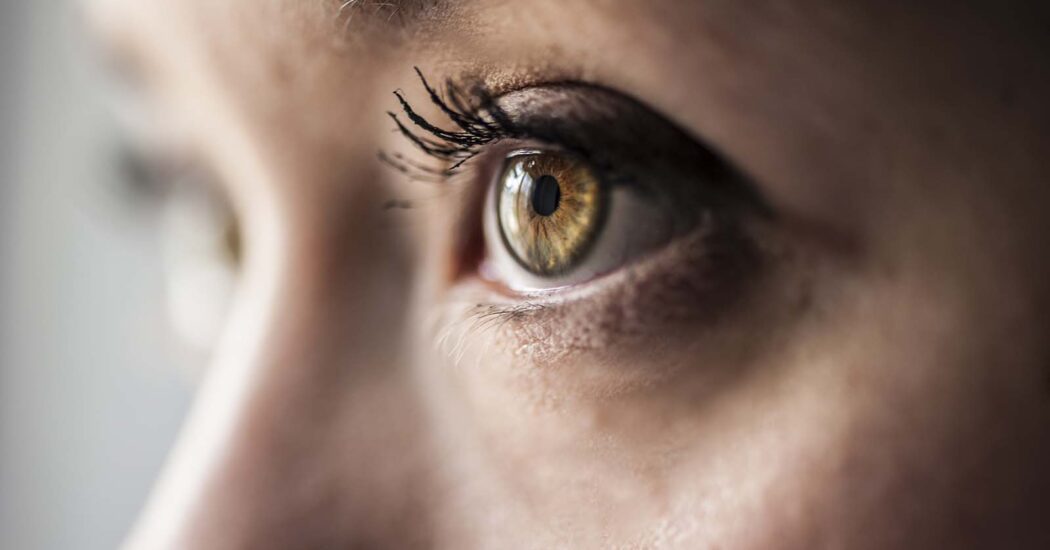
Eyes evolved from a concentration of light sensitive cells. Human eyes are of course much more complex than that. Eyes are spherical. Because they sit in the skull, we only see a limited part of them. The part of the eyes we see consists mainly of the cornea, the lens and the iris. The iris is the part that gives the eye its colour. When we talk about the colour of someone’s eyes, we mean the colour of the iris.
The cornea is the outermost, wafer thin layer of the eye. Because the cornea is completely transparent, we do not see it in the literal sense. Behind the cornea is the iris and beneath it the lens. The eyeball is filled with fluid. On the inside of it is the retina.
How does an eye work?
Of course it is interesting to know how the anatomy of the eye works, and which parts an eye consists of. But it is even more interesting to know exactly how the eye works. How do all these tissues and parts work together to give you your vision?
The pupil is actually an opening in the eye, behind which the lens is located. Light falls through your pupil and the lens onto the retina on the inside of your eyes. Just like an artificial lens, your natural lens has a certain thickness, which determines its strength. Normally this thickness is just right to project the light razor sharp onto your retina at the back of the eye. Do you wear glasses or contact lenses? Then the thickness of your natural lens does not match the distance between the lens and the retina properly. The image is then projected either in front of or behind the retina.
In a perfectly working eye that is of course not the case. Here the image is projected razor sharp onto the retina, but upside down. In principle your eyes see everything upside down. It is your brain that turns the image around, so that you ultimately see properly.