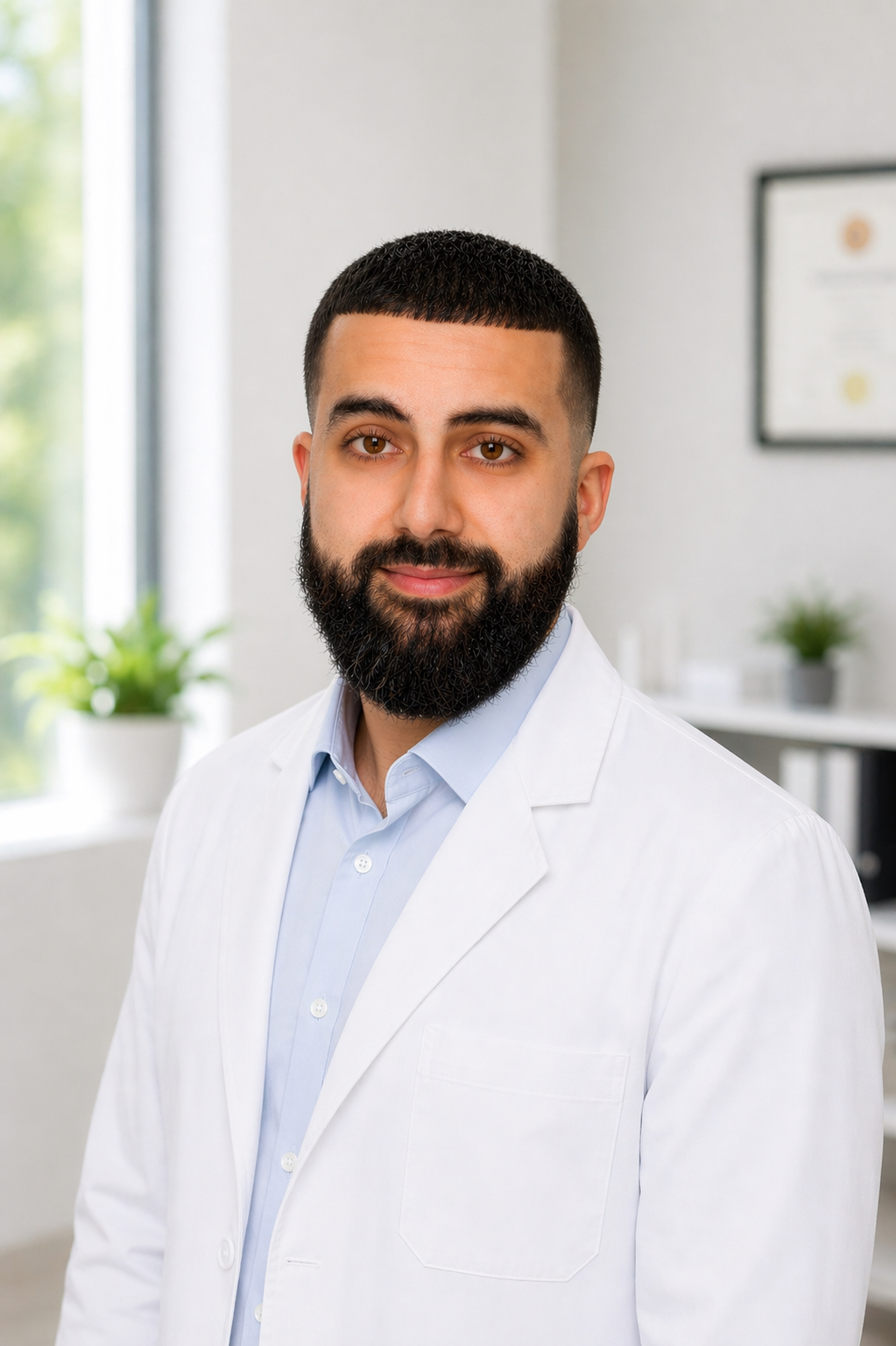
Ali Awad is an optometrist at the Nationaal Oogcentrum. He guides patients during eye examinations, translates technical measurements into understandable explanations and makes sure you take the next step with peace of mind. Calm, clear and involved: that is how patients most often describe him.
From physics to refraction
At secondary school, physics was the subject where Ali found his place. The physics of the eye, how light refracts, how a small deviation of a few millimetres determines whether you see sharply or not, fascinated him so much that he started studying optometry in 2014. That fascination has remained: every eye examination is actually applied physics, but in the service of the person sitting opposite him.
Education & background
- 2014 to 2018: Optometry degree (higher professional education)
- 2018 to present: Working as an optometrist in eye care
- Specialisation: Eye examinations, refraction and pre and post treatment care for laser eye surgery and lens implants
In the years after graduating, Ali gained broad experience with a wide range of eye complaints and patient questions, from simple prescription tests to guiding people who are unsure about a treatment.
Certifications
- Member of the Dutch Optometrists Association (OVN)
- AGB code: 44101113
What Ali’s work is all about
“The great thing about this profession is that you have a direct impact on someone’s daily life. Whether someone has trouble driving in the dark or has not been able to leave the house without glasses for years. When you find the right path together, something really changes.”
For Ali, the work is a combination of three things he would not want to miss: medical knowledge, technology and personal contact. He considers the last one especially important: people should feel heard and clearly understand what is going on with their eyes, without getting lost in jargon.
“The best thing is still when a patient gets clarity or noticeably sees and functions better. Sometimes that is a big decision, sometimes just a reassuring answer, but that moment of ‘okay, now I know’ is what I do this work for.”